
Wool Felt Bags: Why Fibre and Needle Density Decide How Long It Lasts
Two wool felt bags can be cut from sheets that look the same, cost the same and pass the same visual inspection, and then behave completely differently after six months of use. One keeps its body and its surface; the other fuzzes at the shoulder, softens at the gusset, and grows a halo of loose fibre around the handle.
The difference is not the colour or the design. It is the fibre and the needling, and neither is visible in a photograph.
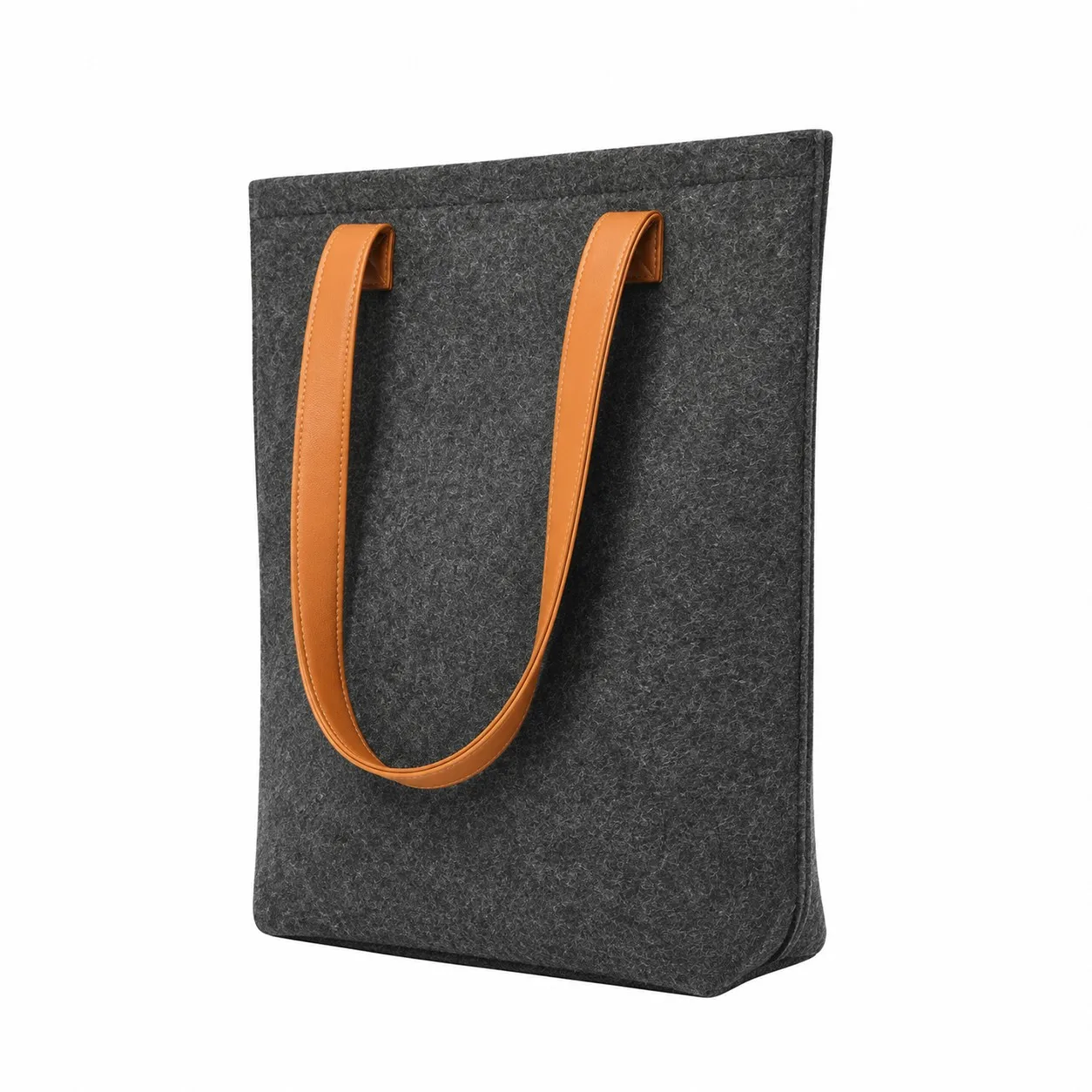
What Wool Felt Does That Woven Fabric Cannot
Wool felt is made by entangling fibres with barbed needles until they interlock into a sheet. There is no warp and no weft, which means there is no grain, no seam that must follow a line, and no fraying when a panel is cut.
That gives a bag designer unusual freedom. Curves can be cut anywhere, edges need no hem, and a single piece can form the body and the base without a seam. It also gives the material its defining weakness: with no continuous yarn, felt has low tensile strength, so it cannot carry a load the way a woven cotton tote can.
Wool contributes properties that polyester felt does not have. The fibre has natural crimp, which gives the sheet a springiness and a recovery that a synthetic felt lacks, and it has a scaly surface that lets fibres lock together more tightly under needling. In a bag, that translates into a body that resists flattening and a surface that does not immediately shine or pill.
Fibre and Needle Density: Two Specs, One Result
Buyers specify thickness, which is the least useful measurement available. The two numbers that determine performance are mass per square metre and needling density.
Mass governs how the bag hangs and how much load the sheet can tolerate before it bows. It also governs how the bag feels, which is most of what a customer is buying at a considered price. A sheet that is too light reads as a craft material; one that is too heavy makes a tote unpleasant to carry for long.
Needling density governs how well the fibres are locked. A densely needled sheet has a firm, slightly dry surface that resists abrasion and holds its shape. A loosely needled sheet of the same mass has a softer, hairier surface that fuzzes where it rubs and compresses where it is loaded.
The interaction matters more than either number alone. A heavy, loosely needled felt can perform worse in a bag than a lighter, densely needled one, because the bag fails at the surface and at the gusset rather than in bulk. A buyer comparing two samples at the same thickness may be comparing two quite different materials.
Practical tests that need no laboratory: press a thumbnail into the sheet and see whether the mark recovers; rub the surface firmly with a pale cloth and look for fibre transfer; fold the sample and hold it for a minute, then release and watch how much of the crease remains.
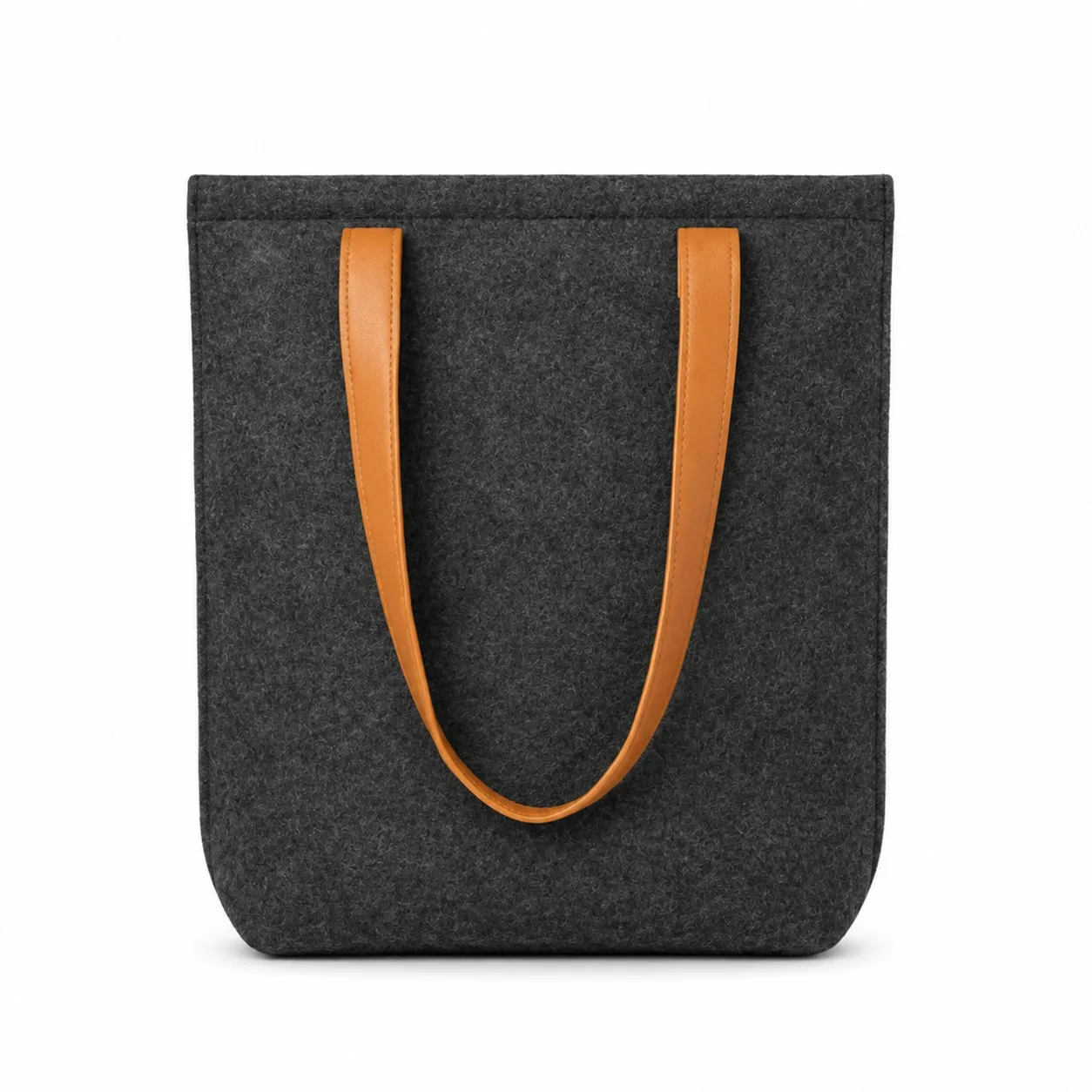
The Seam: Why Felt Bags Split at the Gusset
A felt bag usually fails at the bottom corners, where the gusset meets the base. That joint carries the full load of the contents and it is also where the seam is under the most complex stress.
Two construction choices decide whether it holds. The first is seam type: a simple seam joining two felt edges places the entire load on the thread and on the felt immediately beside the stitch holes. A bound or lapped seam distributes the load across a wider band of material and is markedly more durable at a corner.
The second is what sits inside the joint. A base panel captured in the seam turns the bag from a soft pouch into a vessel and takes the vertical load off the felt entirely. Without one, the corners do the work, and corners made of felt are the weakest part of the bag.
A buyer can inspect this from the inside with a torch. What matters is whether the base panel is captured in a seam or merely resting in a pocket, because a loose panel migrates and wears through the base.
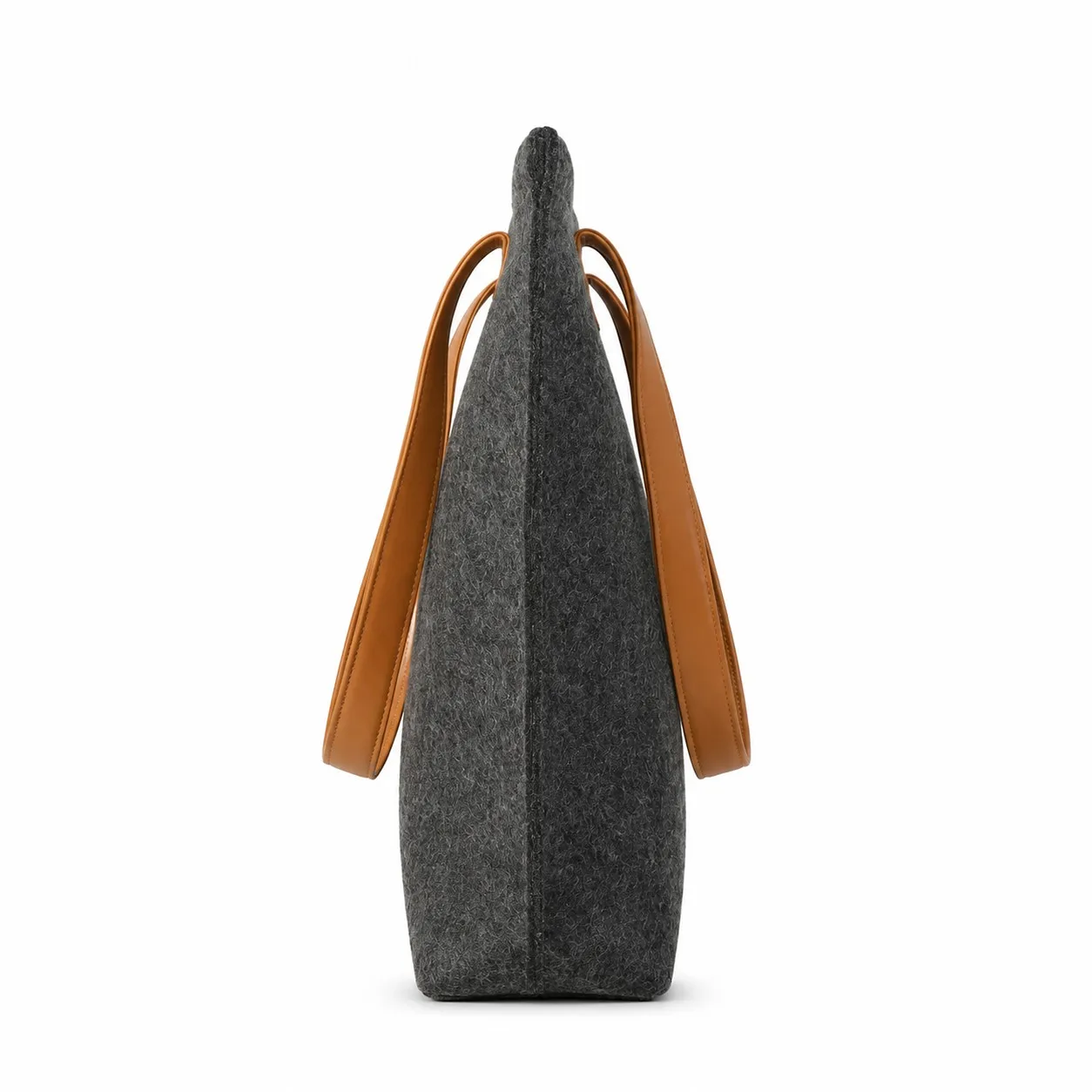
Handle Anchoring: Load Path in a Nonwoven
The handle is where a felt bag most often fails, and the reason is structural rather than cosmetic.
A tab stitched to the felt wall transfers the entire carried load into the sheet’s tensile strength, which is low. Under repeated loading the felt around the stitches stretches, the holes elongate, and the tab tears out along the stitch line. This is not a manufacturing defect; it is what the material does when it is asked to carry a point load.
The reliable construction runs the handle tab down the inside of the bag and anchors it to the base panel, with a reinforced patch at the entry point where the tab passes through the wall. The load then resolves into the base, and the felt wall never has to carry it. Looking inside a sample for this detail tells a buyer more than any drop test performed from outside.
Rivets should not be treated as a substitute for anchoring. A rivet concentrates the load at one point in a material that tears readily, and a pull-through cannot be repaired.
The difference is not the colour or the design. It is the fibre and the needling, and neither is visible in a photograph.
Wool felt bags · Opening notes
Surface Finish and Pilling
Felt pills where it abrades, and a bag abrades in predictable places: under the arm, along the hip, and around the handle entry.
Wool resists this better than synthetic fibre because its crimp and scales hold the fibres in the sheet, but needling density is the larger factor. A densely needled surface presents a compact face that resists the fibre migration that begins a pill.
Surface finishing matters too. A lightly brushed or pressed face is softer to the touch and more susceptible to fuzzing; a denser, flatter face is more durable and reads as more premium in a retail context.
The relevant test is a rub test at the actual abrasion points, not a visual inspection of a new sample. A bag that has been carried for a month tells the truth about a surface finish in a way that a flat swatch cannot.
It is worth separating two complaints that get merged. Pilling is the formation of small fibre balls that stay attached to the surface. Fuzzing is loose fibre standing up from the face, and it is what makes a dark bag look dusty. The first comes from fibre migrating under abrasion; the second from an under-finished surface. They have different causes and different fixes, and a buyer who describes the problem accurately generally gets a better answer.
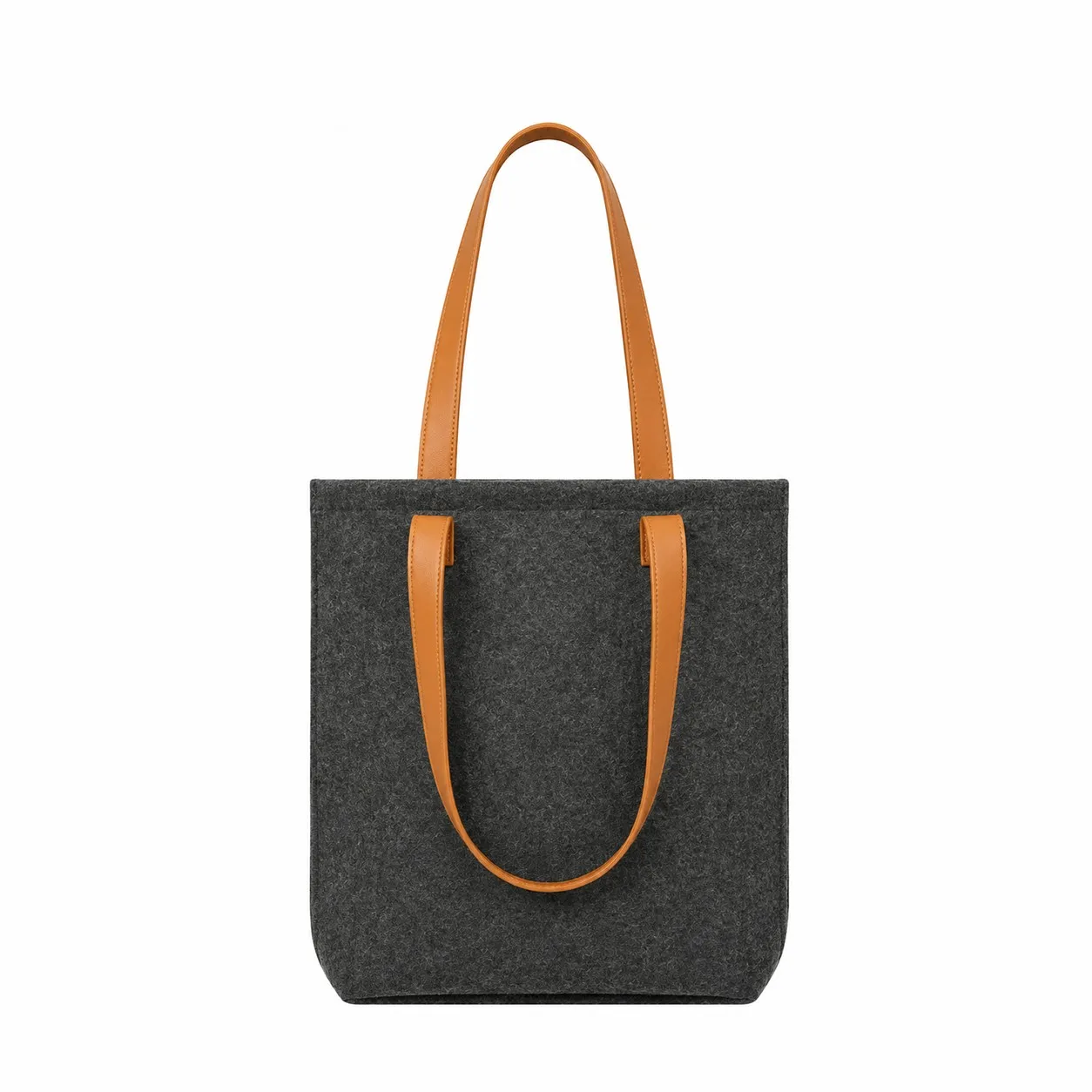
Water, Stains and the Lanolin Misconception
Wool felt is often described as naturally water-repellent because wool contains lanolin. In practice the lanolin in processed felting wool has largely been removed during scouring, so the effect is far weaker than the folklore suggests.
What a wool felt bag actually does with water is absorb it slowly and dry slowly. A light shower beads on the surface initially; a soaked patch takes time to dry and, if the dye is not well fixed, can leave a tidemark. Stains from oils and from dark liquids are difficult to remove because the fibre holds them.
Polyester felt behaves differently: it does not absorb much, dries quickly, and cleans more readily, but it pills and holds a static charge. Neither material is universally better; the choice depends on the market the bag is sold into and on whether the customer expects to treat it as a textile or as a utilitarian object.
The honest answer to a buyer’s question is that a wool felt bag should be spot cleaned, air dried away from heat, and not machine washed, because agitation mats and shrinks the felt permanently.
From Sample to Repeat Order
The commercial risk in this product is not the first sample, which is usually made slowly and checked carefully. It is the fourth container, produced on a schedule.
What holds consistency: a written specification covering mass per square metre, needling density, fibre composition, seam construction, handle anchoring method and colour standard; a retained sample held by both sides; and first-article approval against that sample at the start of each run rather than only at final inspection.
What breaks it: verbal specifications, colour approved from a digital file, dimensional changes accepted after the cutting dies are made. All three are common and all three appear as a complaint on a repeat order, when shelf space has already been committed.
There is a small but consequential detail in this category: because felt has no grain, a panel can be cut in any direction, and a bag cut across the sheet can behave differently from one cut along it. That belongs in the specification too, or the second run will be cut for yield rather than for performance.
Frequently Asked Questions
Is wool felt strong enough for a bag?+
The felt itself has low tensile strength because it has no continuous yarn, so the bag’s strength comes from construction — a captured base panel, a bound seam at the gusset, and a handle anchored into the base rather than stitched to the wall.
What should I specify instead of thickness?+
Mass per square metre and needling density, together with fibre composition. Thickness alone does not predict how a sheet will wear or how a bag will hang.
Why does the handle pull out?+
Because the tab was stitched only to the felt wall, so the carried load resolves into the sheet’s weakest property. Anchoring the tab to the base panel through a reinforced patch removes the failure mode.
Can a wool felt bag be washed?+
No. Agitation mats and shrinks felt permanently. Spot clean with a damp cloth and mild detergent and air dry away from direct heat.
Does wool felt resist water?+
Less than commonly claimed. Scouring removes most lanolin, so a wool felt bag absorbs water slowly and dries slowly. Polyester felt sheds water better but pills more.
Can colour be matched across repeat orders?+
Yes, with a retained physical standard and lot-based dyeing. Deep shades hide lot variation; pale and mid-greys show it, which is why the grey family needs the tightest control.
Send the specification, not the photo
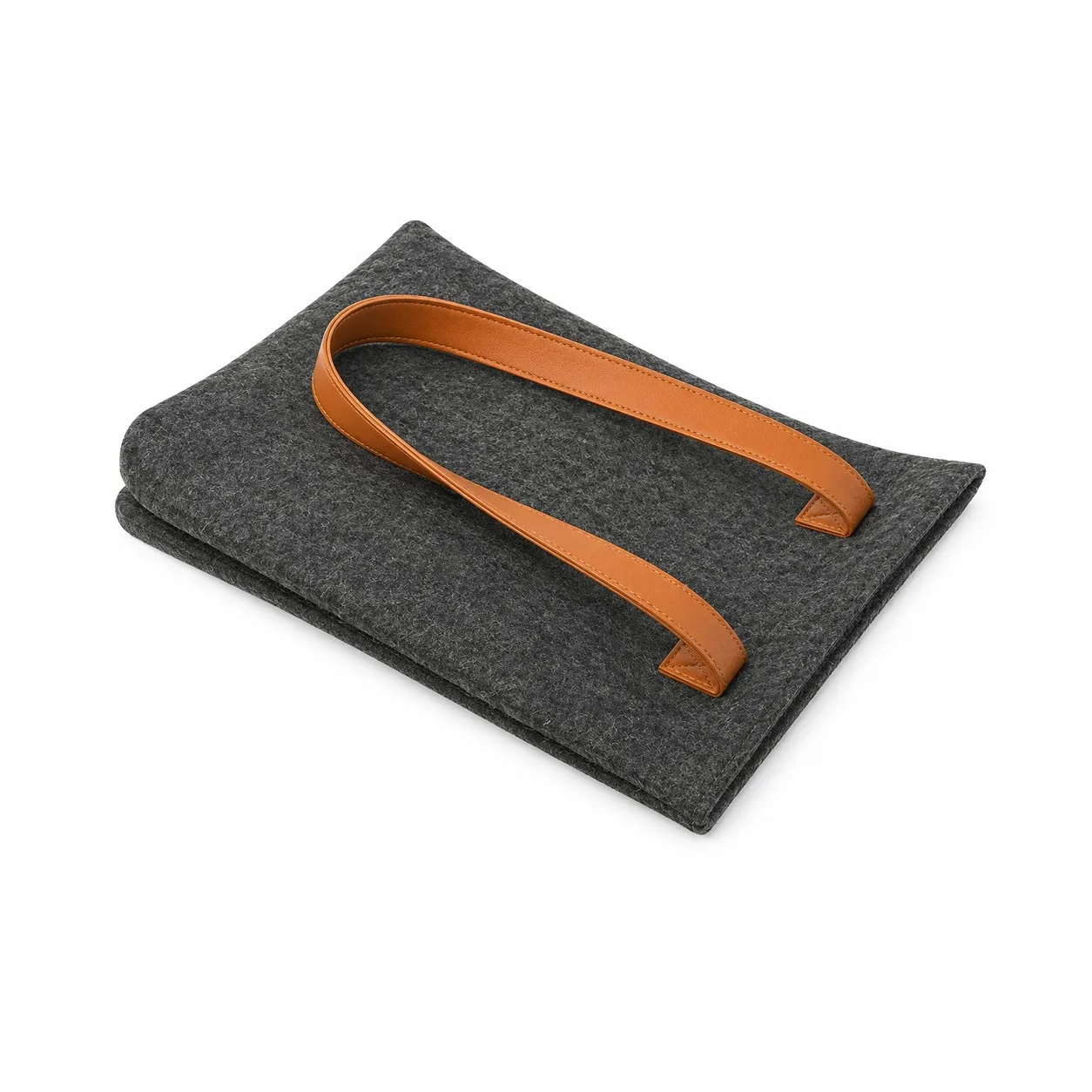
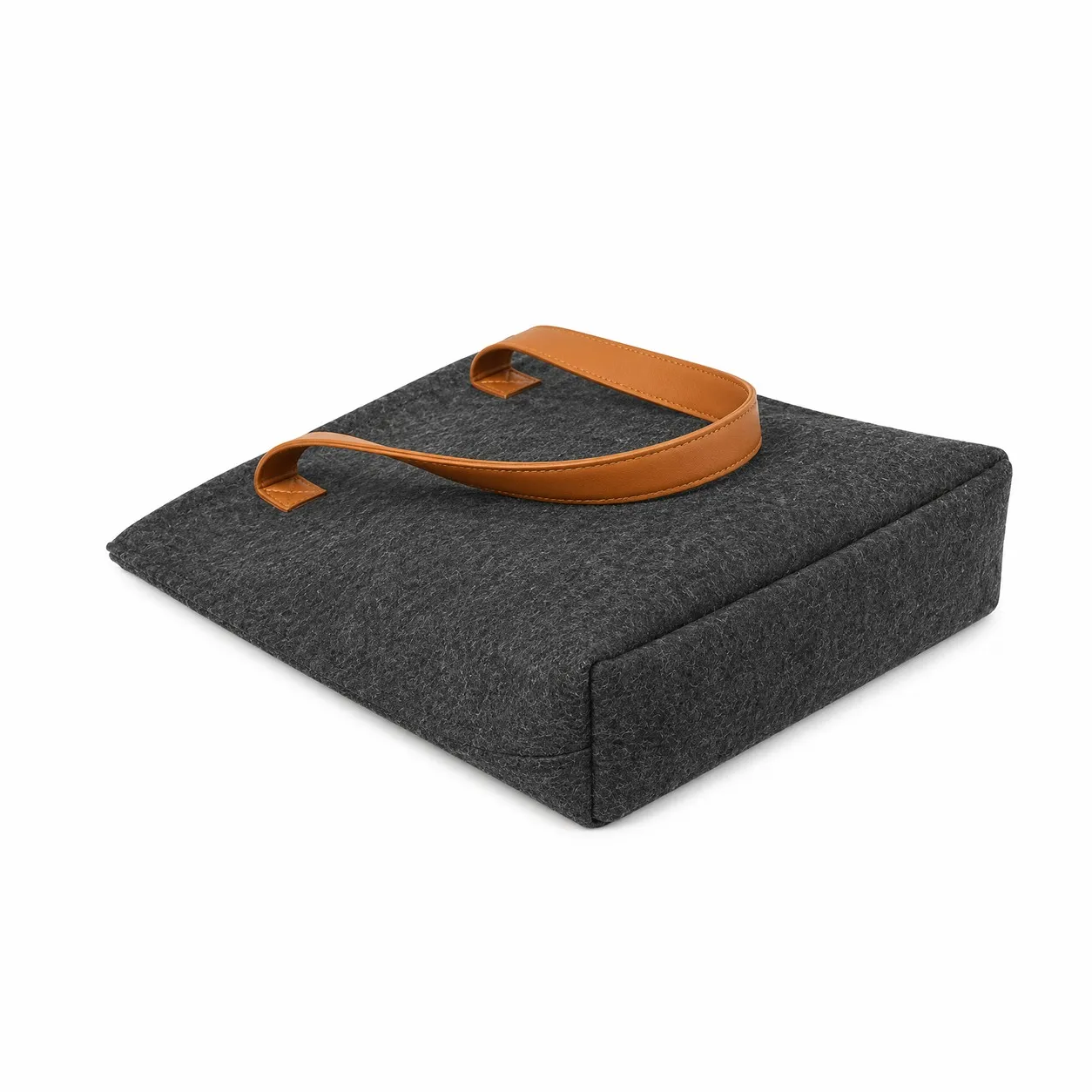
A photo cannot tell us whether the base carries a board, how the handle tab is anchored, or what the felt weighs per square metre. Tell us the channel, the working load and the date the goods have to land, and we will come back with a specification, a sample and a carton plan.
Post time: Nov-25-2026