
Needle Felted Wool Dryer Balls: Why Handmade Changes the Cost and the Life of the Ball
Needle felting is not decoration applied to a finished ball. It is a construction method: barbed needles drive fibre into fibre until the mass interlocks, and the surface pattern is made by the same process that gives the ball its density.
That distinction explains two things a buyer notices immediately and cannot always account for. Why a hand-felted ball costs more than a wound one, and why it still holds its shape after a hundred cycles when a cheaper ball has flattened. The cost and the durability come from the same operation.
In this guide — jump to a section▾
The cost and the durability come from the same operation.
What Hand Needle Felting Actually Is
The process starts with carded wool, which is loose fibre combed into a web with the fibres aligned in one direction. The web is rolled and compacted into a rough sphere, then worked with a needle tool whose barbs catch surface fibres and push them down into the body. Each pass increases density and draws the outer layer into the core.
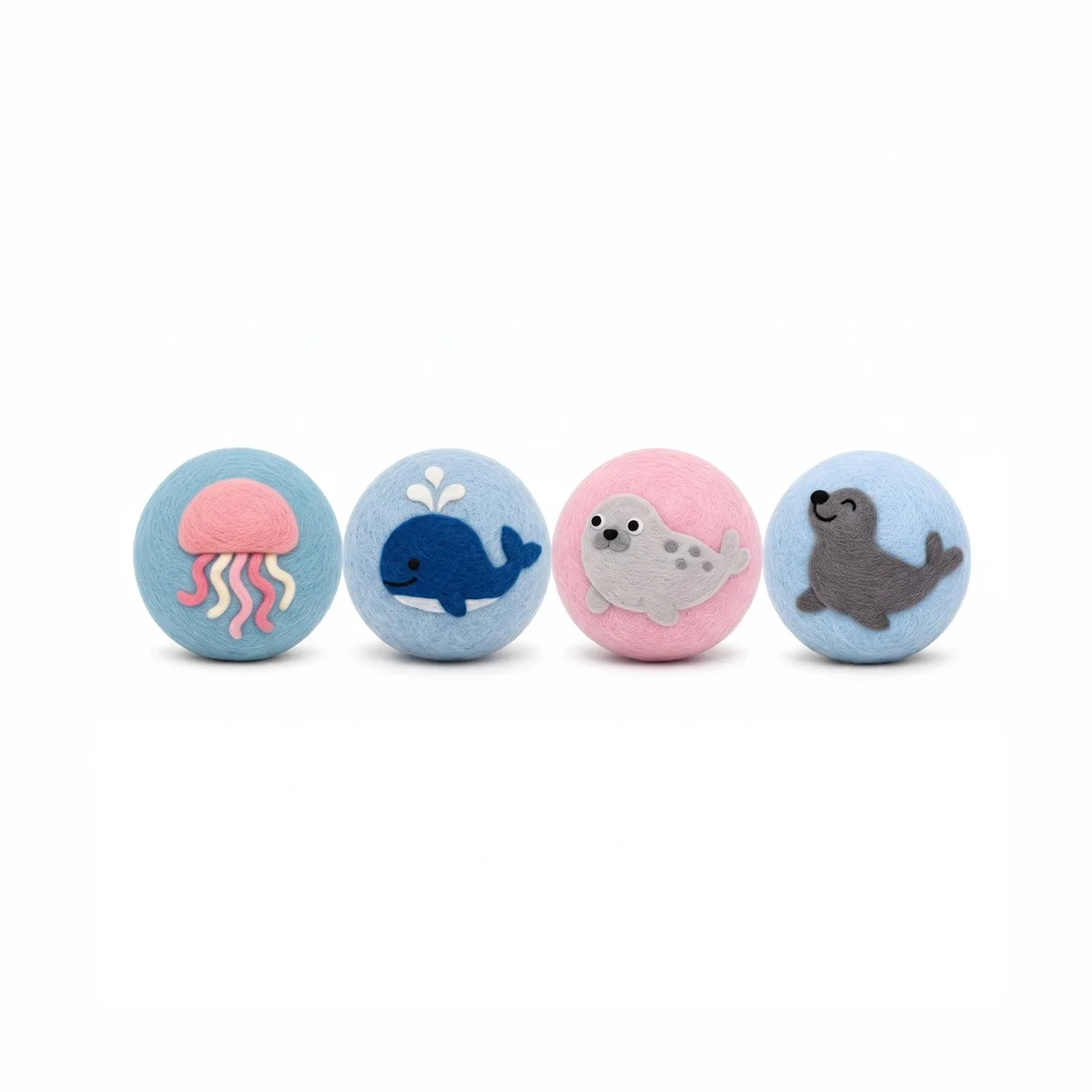
Two properties come out of this that a wound or wrapped ball cannot reproduce. The first is a continuous fibre path from surface to centre, so there is no interface where layers can separate. The second is a surface that is dense enough to hold small shapes without adhesive — a whale, a seal, a jellyfish with six tentacles — because the same barbs that compact the body can fix a coloured tuft into it permanently.
A wound ball, by contrast, is made by wrapping yarn or roving around a core and closing it. It looks the same in a photograph. The difference appears at the first serious mechanical stress, and it is visible the moment a ball is cut open.
Why Handmade Changes the Cost Curve
A machine-wound ball has a cost that scales almost linearly with volume and falls with speed. A hand-felted ball has a cost that is dominated by minutes of skilled labour per unit, and that does not fall when the order doubles.
This has a practical consequence for a buyer building a price ladder. A hand-felted ball sits at a different point on the shelf than a machine-made one, and it has to be sold on the basis that justifies the gap: the decoration is structural, the ball does not shed, and the shape survives. Priced as a commodity, it loses to the wound ball on cost; positioned as a gifting or premium accessory, the labour content becomes the reason to buy rather than the reason to negotiate.
The other consequence is planning. Because the constraint is hands rather than machine hours, capacity in a peak season is finite in a way that a moulding line is not. A buyer who places a large gift order late is not competing for a machine slot but for a workbench, and those are harder to add.
Consistency Across Four Designs
The hardest part of a four-character set is not making one good ball. It is making the fourth ball of the fourth design look like it came from the same batch as the first.
Hand work introduces variation in three places: the size and firmness of the body, the position and scale of the design on the face, and the shade of each coloured element. All three are controllable, but only with tooling and reference standards rather than with skill alone.
The practical controls are a size and weight tolerance agreed as a band rather than a single number, a positioning guide so that the design sits on the visible face rather than drifting toward a pole, and a retained master sample per design held by both the buyer and the factory. Without the third, a repeat order is judged against memory, which is where “the pink is different this time” complaints come from.
The Core: Why a Felted Ball Holds Its Shape
Density is what a dryer ball is actually selling, and it is the property most easily faked in a photograph and most easily checked with a knife.
A properly felted ball is dense throughout, with the same structure at the centre as at the surface, and it resists compression between finger and thumb. That density does two jobs in the drum: it gives the ball enough mass to push between layers of wet fabric rather than float above them, and it gives it the resilience to return to shape after being compressed in a hot drum.
A ball that is a thin felted shell around a loose core behaves differently. It compresses easily, it does not separate fabric layers effectively, and the shell eventually separates from the core, which shows up as a hollow or lumpy ball and as loose fibre in the lint filter.
Buyers can check this without a laboratory. Weigh the ball against its declared size, squeeze it, and cut one open from an approved batch. A dense ball cuts like a solid object. A wrapped one separates into layers.
Colour Matching in Pastel Palettes
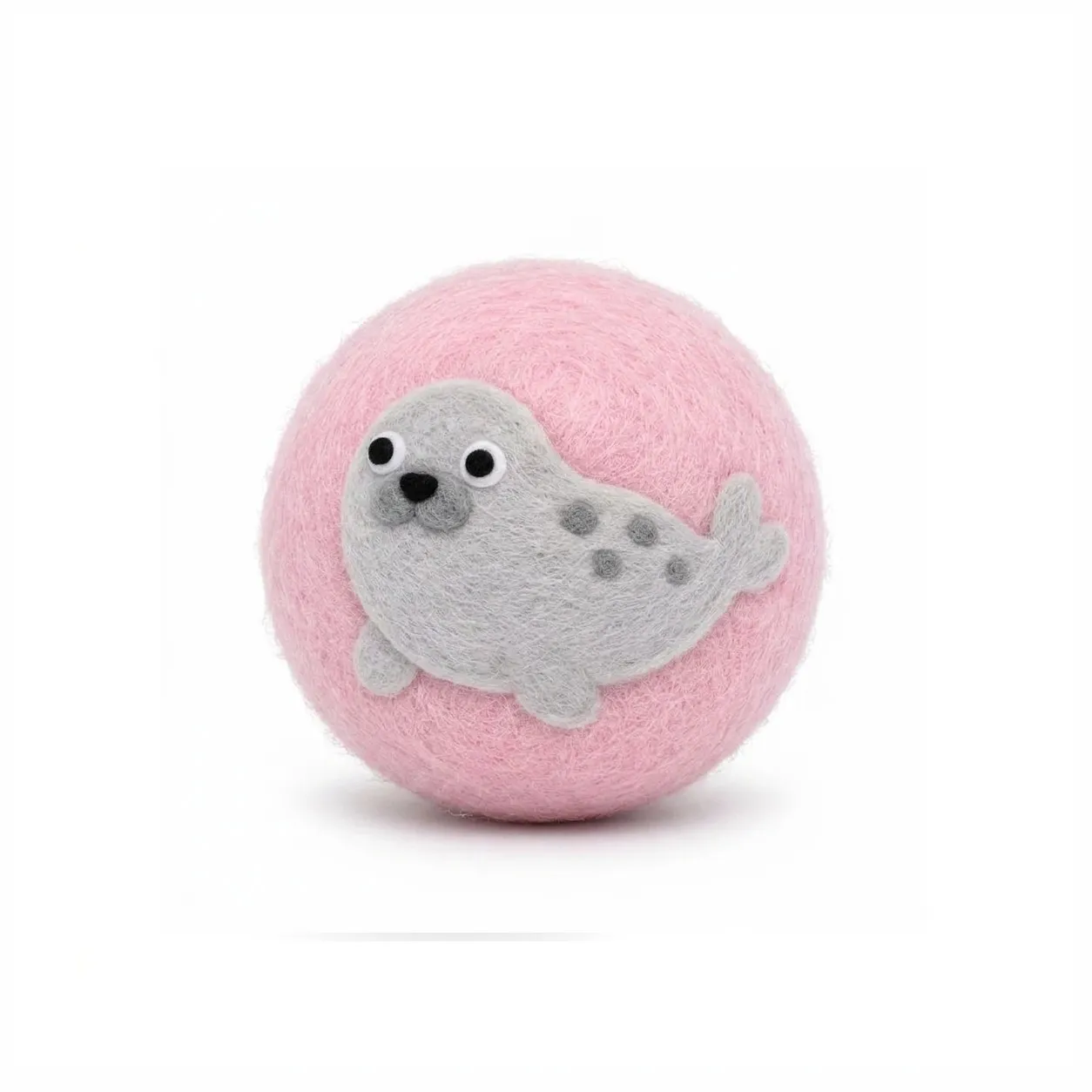
Pastel decoration is the most demanding colour work in this product, because pale shades show variation that saturated ones hide.
Two things drive the result: the dyed wool lot and the amount of fibre used per element. A slightly different lot shifts a pale pink visibly, and a heavier tuft of the same wool reads darker. The control is to dye in lots sized to the order, keep a retained sample of each lot, and match new production against the physical sample rather than against a digital colour reference.
There is also a performance dimension. Colour used on a laundry accessory has to be fast to water and to rubbing. Wool takes dye well but releases it readily if the fixation is incomplete, and a pale ball meeting a wet white load in a warm drum is exactly the condition that exposes it. Testing at sample stage is cheaper than a returns programme.
Performance: What Hand Made Wool Does in the Drum
The mechanism is mechanical before it is chemical. A dryer ball separates layers of fabric so that air can move between them, and the wool absorbs some surface moisture and releases it into the airflow. Density determines how well the ball does the first job; wool quality determines the second.
New Zealand wool contributes here for reasons that are structural rather than romantic. The fibre is long and strongly crimped, which gives the felted mass resilience and helps it recover after compression. A short, weak fibre felts into a dense but brittle ball that packs down and stays packed. That is why wool source is a specification item and not a marketing line, and why a responsible supplier should be able to say where the wool came from and under what standard it was sourced.
What should not be claimed is a precise percentage saving on drying time. The result depends on load size, fabric mix, spin speed, machine type and starting moisture, and any single figure presented without those conditions is not a measurement. The defensible claims are more even drying, fewer overdried hot spots, and reduced static.
Scaling a Handmade Line Without Losing the Sample
The commercial test of a handmade product is whether the thousandth unit resembles the approved sample. That is a process question, not a craft question.
What makes it work: a written specification per design covering body size, weight band, design position and colour references; a first-article approval before each run; an in-process check at a defined interval rather than only at the end; and a retained sample set held on both sides.
What breaks it: verbal specifications, a single reference ball kept only at the factory, and design changes accepted after the run has started. All three are common, and all three surface as a quality complaint on the second order rather than the first — by which point the buyer has committed shelf space and cannot simply switch supplier without a re-specification cycle.
A buyer’s practical lever is the first-article approval. Asking to see the first unit of a run photographed against the approved sample, with the weight and dimension recorded, converts a craft product into something that can be audited. It takes a supplier half an hour and it removes most of the drift that handmade production is prone to.
Frequently Asked Questions
Is needle felting the same as wet felting?▾
No. Needle felting uses barbed needles to mechanically entangle dry fibre. Wet felting uses water, soap and agitation. Needle felting allows precise placement of small shapes, which is why it is used for the decorative faces on these balls.
Can a needle-felted decoration come off in the dryer?▾
A needle-felted element is interlocked with the body fibre and has no adhesive layer or seam to fail. A glued or stitched appliqué can detach under heat and moisture. The construction method should be confirmed in writing before an order is placed.
Does handmade mean the balls vary in size?▾
There is a tolerance band rather than an exact dimension, which is normal for a hand-felted product. The band should be agreed in writing and checked at first-article approval, so that variation is managed rather than discovered.
How many cycles should a wool dryer ball last?▾
Life depends on felt density, load size and drum temperature rather than on a single published figure. A dense, properly felted ball retains its shape far longer than a wrapped one. Buyers should assess durability by cutting a sample and by a wear test rather than by a claim on the packaging.
What wool is used and can the source be documented?▾
New Zealand wool is used for its staple length and crimp, both of which affect how the felted ball performs and how long it holds shape. Source documentation is a reasonable request at quotation stage for any buyer with a sustainability or provenance requirement.
Are these sets suitable for private label gifting programmes?▾
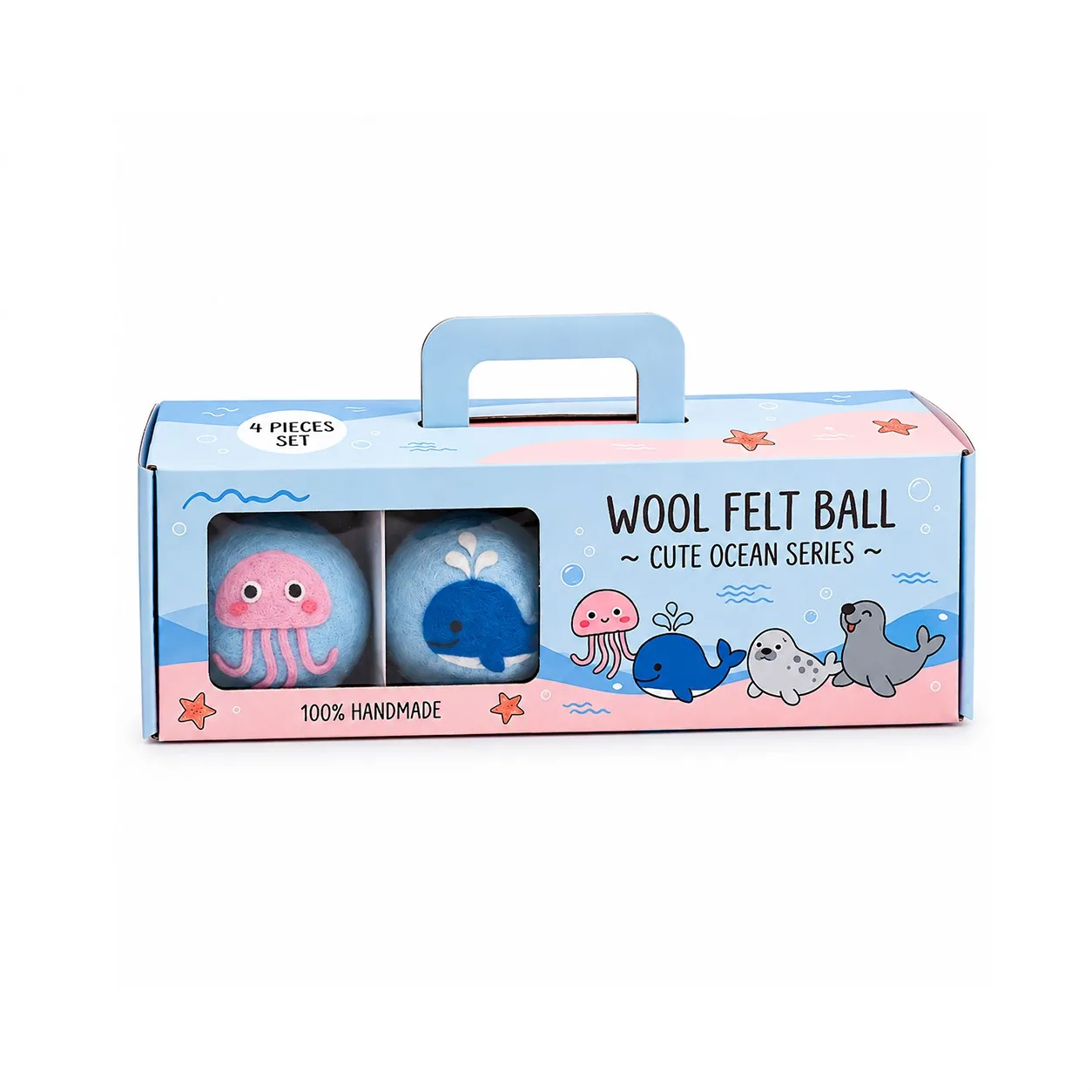
Yes. The four-design assortment, the box artwork and the barcode placement can all be produced to a buyer’s specification. Approve the artwork with the product sample, because a late packaging change resets the production slot in a season where workbench capacity is the constraint.
Send Us the Room, We’ll Send the Numbers
Tell us the wall dimensions and what the room is used for. We’ll come back with a panel count, a layout and a sample in your colour.
Post time: Nov-25-2026