
 Holiday lets · Reviews · 7 min read
Guests almost never complain about moisture. They complain about a smell, a damp feeling, a room that needed airing — and then they write it down where the next twenty bookers can read it.

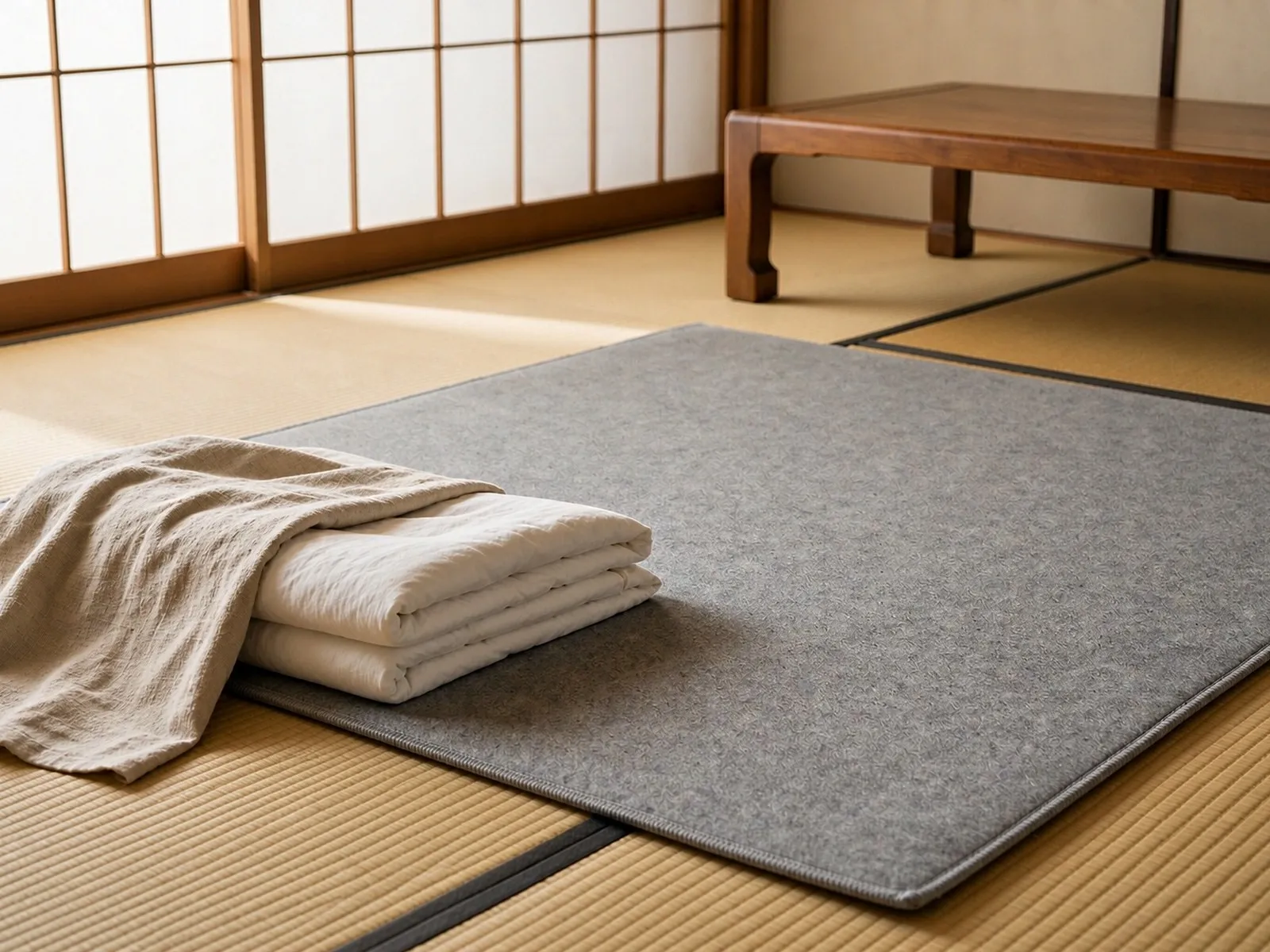
Floor-level bedding in a room that is closed between guests: the moisture has nowhere to go but into the mattress.
Start with the complaint, not the product
Read enough guest reviews and the vocabulary of this problem is consistent. Smelled musty when we arrived. The bedding felt damp. We had to leave the windows open all night. Everything in the closet smelled of the sea.
None of those guests are describing a cleaning failure, and most of them are not describing a building defect either. They are describing a bed that has been slowly absorbing moisture from underneath, in a room that is shut for days at a time, in a climate that never really dries out.
The commercial damage is not the mattress. It is the review, the drop in occupancy that follows a run of three-star scores, and the discount you apply to win the bookings back. That is why this problem is worth solving before it shows up in the guest-facing numbers.
Why it happens in the properties that look fine
The rooms that suffer are rarely the ones that look neglected. They are the ones that are well finished and tightly sealed: new windows, no trickle vents, an ensuite with an extractor that runs for ten minutes after the light goes off, a mattress on a slatted base or straight onto a platform.
A person sleeps, and releases water vapour for eight hours into that room. Warm, moist air is heavier than dry air and drifts down. It reaches the mattress underside, meets the cold frame or the cold floor, and condenses. Nothing is leaking. Nothing is dirty. The water is being manufactured on site, every night.
| Ground floor or basement | Cold floor slab, warm room above it. The strongest condensation gradient in the building. |
| Coastal or lakeside | Outdoor humidity is already high. The room starts every night with a deficit. |
| Floor-level bedding | Futon, tatami, mattress on a platform: no air gap at all under the sleeping surface. |
| Long gaps between stays | Nobody opens a window for a week. The moisture has all the time it needs. |
| Plastic underlay fitted | Seals the only route the vapour had. The most common cause of all, installed with good intentions. |
What housekeeping can and cannot fix
Airing works, briefly. Open the windows, prop the mattress, let the room breathe for an afternoon, and the surface reads dry by the time the next guest arrives. Two days later it is back, because the source of the water was never the surface.
Washing helps less than it looks. Covers and protectors are washable; the underside of the mattress is not. The layer that holds the smell is the layer that never gets cleaned.
This is the point where properties usually buy a dehumidifier. It is the right instinct and the wrong order: a dehumidifier is running cost against a symptom, and it still does not put a breathable interface under the bed.
The cheap fix that makes it worse
A plastic or vinyl underlay costs almost nothing and reads as protection. Against a spilled drink it is. Against vapour it is a lid — it stops the moisture at exactly the plane where it was trying to escape, and it does so permanently.
Guests notice the rest: it crinkles under the sheet, it cracks at the corners within a season, and it is the first thing a housekeeper removes when the bed is stripped for a deep clean.
Waterproofing is a lid. What a damp bed needs is a route.
What a felt layer changes
Needle-punched felt is an open fibre mat, one solid layer through its full thickness — no film, no foam core, no laminated backer. Under a mattress it does three things a plastic sheet cannot.
It lets vapour through. Moisture moves within the fibre rather than stopping at it, so the underside keeps the drying route it lost when the frame was sealed.
It holds and releases. The fibre takes a small amount of surface moisture without reading wet, and gives it back to the room as the room dries — which is what keeps the interface below the level where mould starts.
It breaks the cold bridge. Still air in the fibre means the frame or the floor is no longer the coldest surface in the assembly, so the condensation has less reason to form there at all.
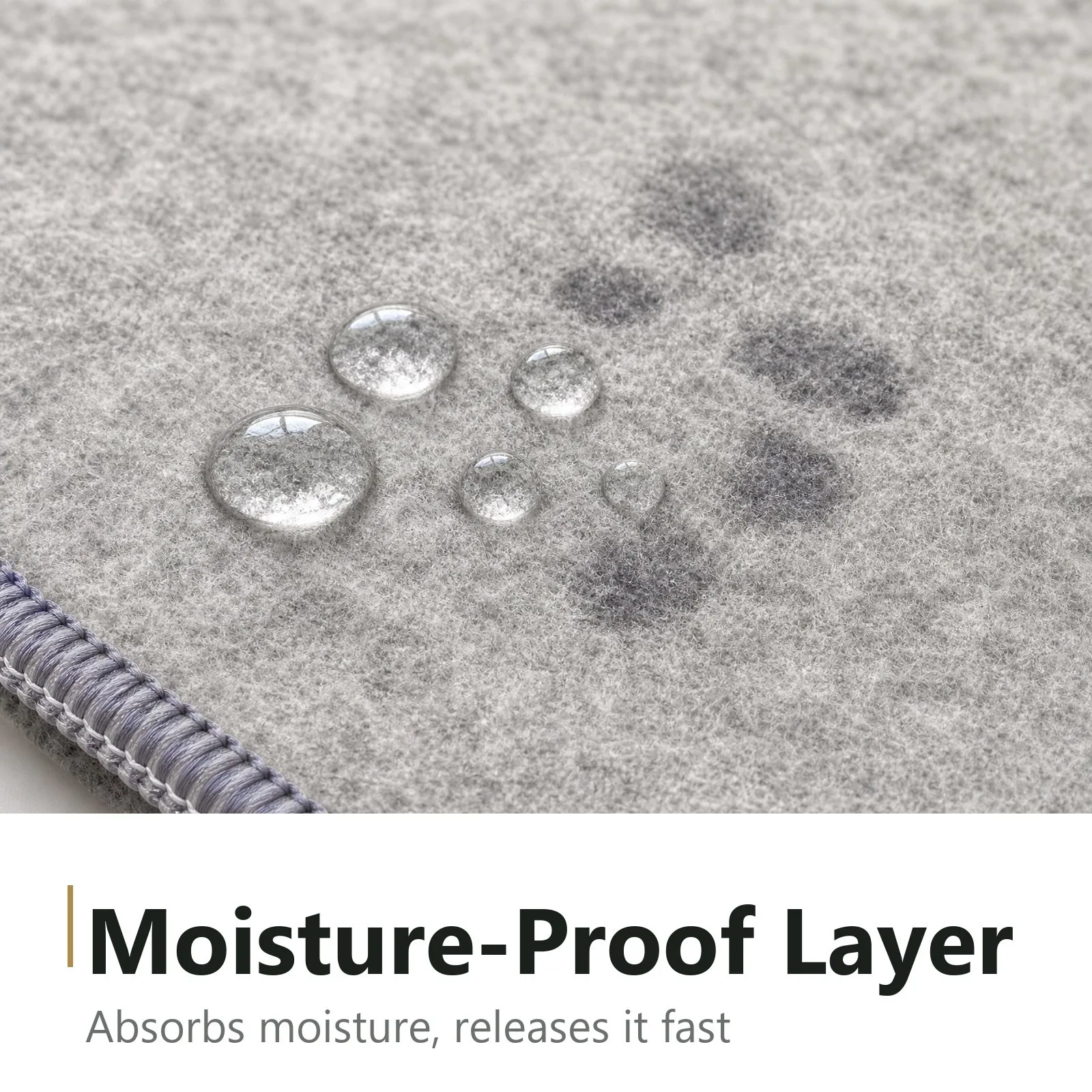
Surface moisture sits on the fibre and leaves with the air. It does not travel down into the mattress.
| Construction | Single needle-punched felt layer |
| Edge | Stitched binding, no loose fibre |
| Sizing | Cut to frame, not to mattress |
| Turnover | Lift, shake, replace |
| Supply | Bulk, per property or per rollout |
The routine it adds
Ten seconds at turnover, and one instruction to the cleaning team: the pad goes up against the wall, not folded on the bed. Folded, it dries on the outside only.
Turnover. Lift, shake out, replace before the sheet goes on.
Between stays. Stand it against a wall while the room is serviced, and open a window for ten minutes if the property has been closed.
Deep clean. Rotate pads between beds and look at the slats underneath. The slat is the honest report on how the pad is doing.
Seasonally. Spot clean with a damp cloth, air dry flat, never tumble dry — heat mats the fibre permanently.
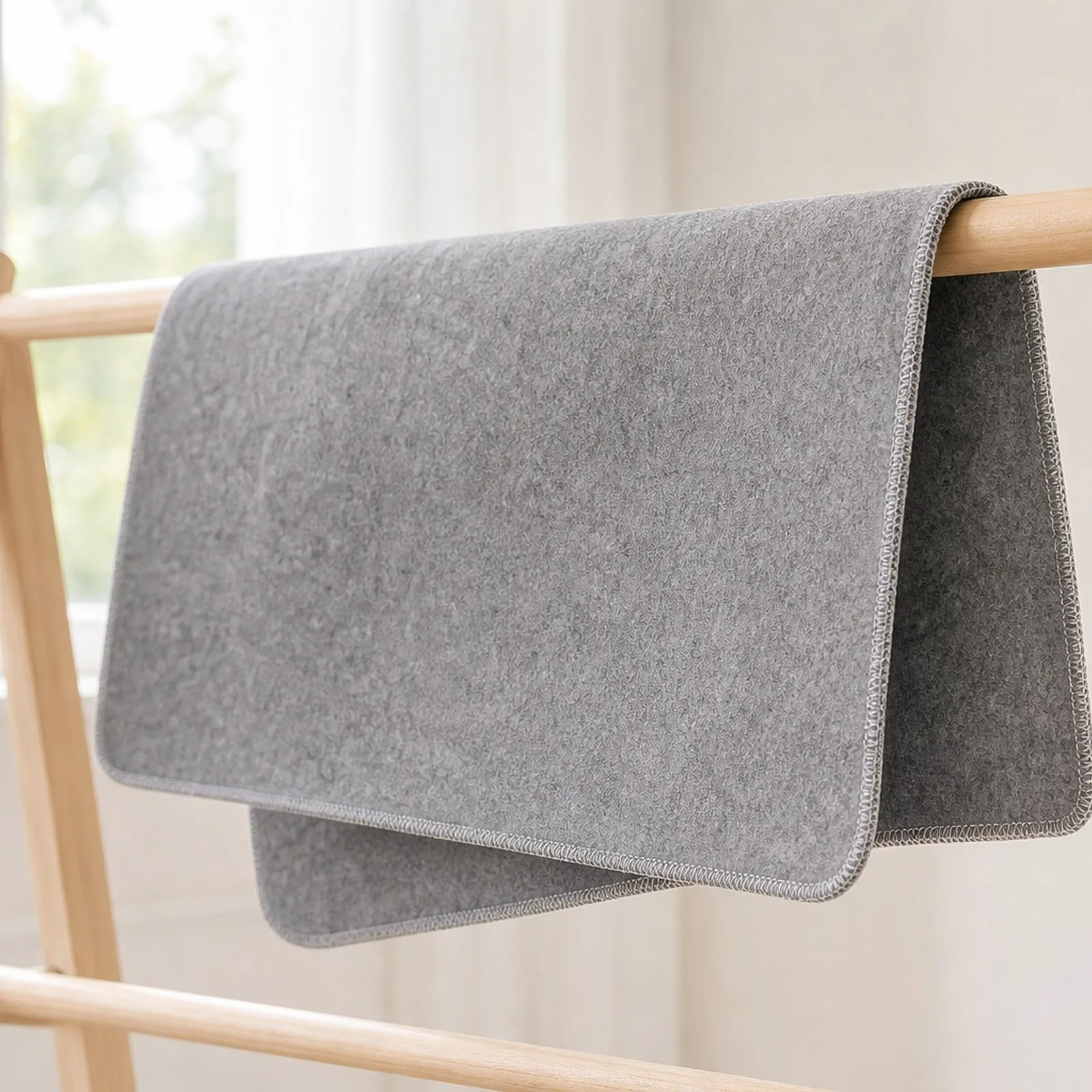
Drying is passive. There is nothing to inflate, unzip or plug in.
What it does not do
It is not a waterproof protector. A spill passes through. Keep the existing protector for liquids and put the felt between mattress and frame.
It is not a ventilation system. If the extract is undersized and the windows never open, that is a building issue. The pad manages the interface; it does not remove water from the air.
It is not a fire or contract substitution. Where a certificate is specified, ask us for documentation in writing rather than assuming.
Prove it on the ten worst beds
Take the units that already get the moisture comments — ground floor, coastal, or the ones closed for a week at a time. Photograph and date the underside of each mattress, fit pads for two months, then photograph the same corners again.
Judge on four things: the underside of the mattress, the slats, whether a closed room still smells on arrival, and whether the pads survived your cleaning team. That is evidence you can put in front of an owner.
|
The cheapest line in the maintenance budget is the one under the mattress. See the felt moisture pad, request samples for a pilot, or read the housekeeping and sizing guide. |
Post time: Nov-06-2026