Sauna Hat · Material and Construction Guide
Merino Wool Sauna Hat: What Does One Piece Actually Change?
A sauna hat is a comfort device, not a heat shield: it changes the air that reaches your head. Here is what wool does inside that layer, why a fulled one-piece shell ages differently from a seamed one, and the five details to settle before you order.
What a sauna hat actually does
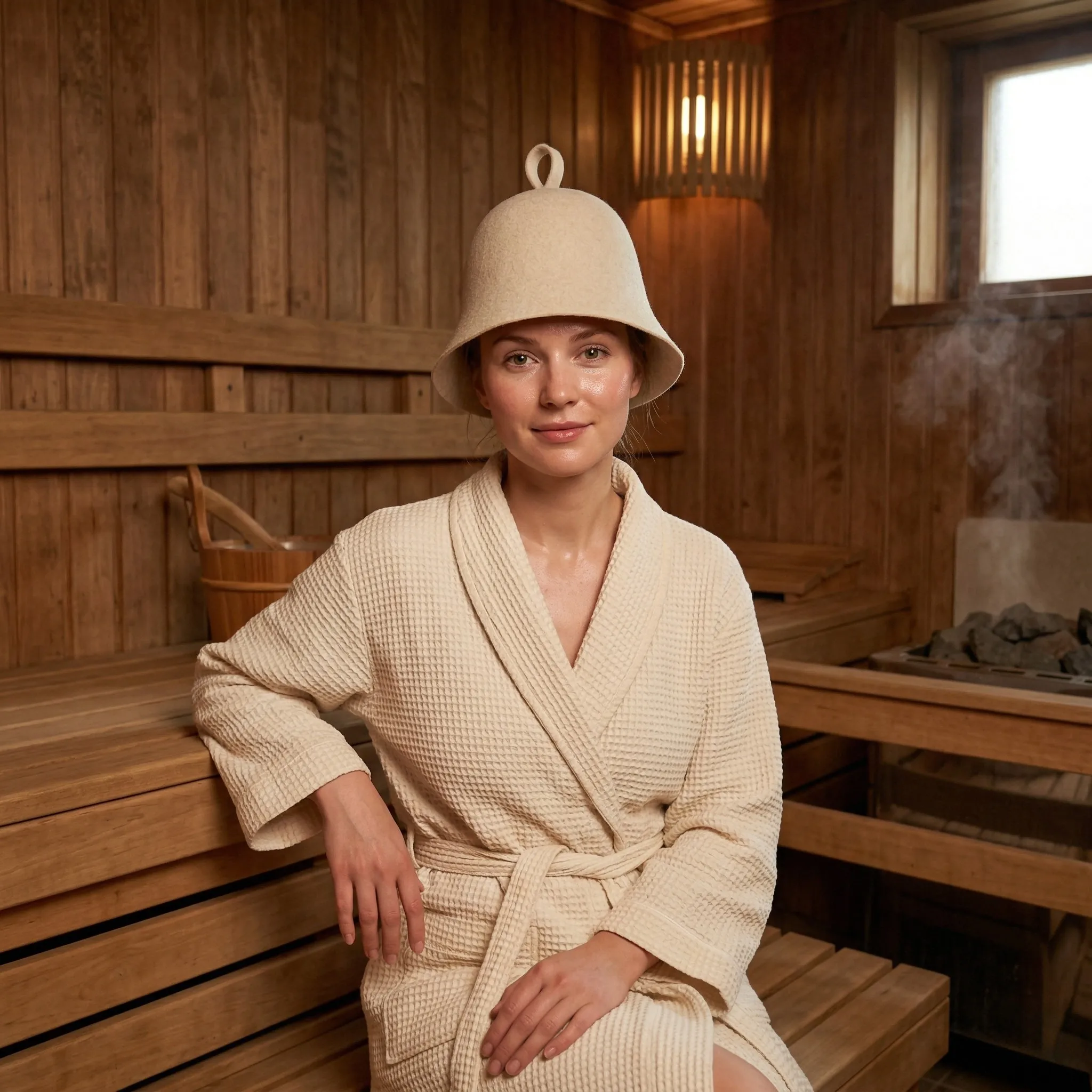
A sauna hat works on air, not on skin. The felted shell traps a layer of still air against the scalp, and still air conducts heat poorly, so what reaches your head arrives more slowly than the air in the room.
Wool adds a second effect. Its fibres are crimped, which is why a felted mat is mostly trapped air by volume, and wool takes moisture vapour into the fibre rather than holding it as a film on the surface. The Woolmark Company describes the mechanism directly: merino regulates the microclimate around the body by absorbing moisture vapour and releasing it into the air. In a sauna that is the difference between air that sits wet and heavy on your forehead and air that merely feels warm.
There is a third job that gets less attention: the brim. Ear cartilage is thin and poorly supplied with blood, so it registers heat sooner than the scalp does. A brim that sits over the tops of the ears is doing more for comfort than an extra layer of felt on the crown.
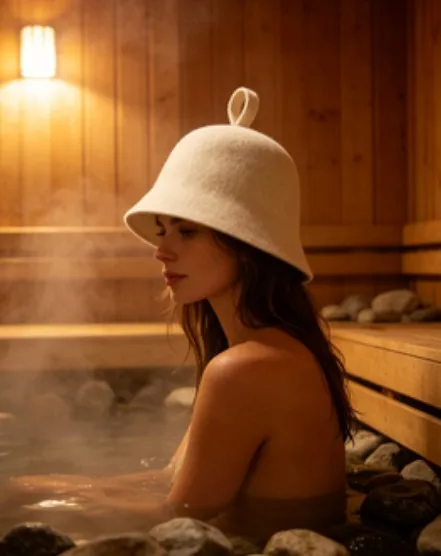
The effect you can feel is at the start of a round. Without a hat the heat arrives all at once and the first minute is the worst one; with one, the rise is gentler and the round becomes something you sit through rather than endure. What the hat cannot do is cool you: the air inside warms up too, just more slowly.
Why wool, and why not cotton or towelling
Wool is the only common hat material that insulates and manages vapour at the same time; the others do one job or the other.
| Material | At heat | Once it takes on moisture | Verdict for a sauna hat |
|---|---|---|---|
| Wool felt | Low thermal conductivity, keeps its shape | Takes vapour into the fibre and still insulates | The default choice |
| Cotton canvas | Thin, conducts faster, feels hot against the skin | Wets through and clings; cools sharply on the way out | Works, but flattens and stays damp |
| Cotton towelling | Thick and absorbent, so it feels protective at first | Becomes heavy and wet, then drips | Common in rental saunas, poor for repeat use |
| Synthetic fleece | Insulates, but holds no vapour | Feels clammy against skin and keeps odour | Not what a hot room asks for |
| Linen | Light and crisp, almost no loft | Wets quickly and stays close to the head | Better as a towel than as a hat |
The comparison comes down to one question: what happens in minute six, when the hat is warm and slightly damp? Wool is still insulating. Cotton has become a wet compress. Synthetics have become a warm plastic film.
What merino adds, and what it does not
Every wool felt works as a sauna hat. Merino changes how the hat feels on the forehead and ears; it does not change how much heat it stops.
Merino is a fine wool, and fine fibres bend rather than stand up against skin. Woolmark puts it as a material fact: merino wool fibres are extremely fine, which lets them bend, and that is why the fibre feels soft rather than prickly. On a jacket this is a comfort detail. On a brim that sits against the forehead and the top of the ear for a quarter of an hour, it is the difference between a hat people keep and a hat they take off.
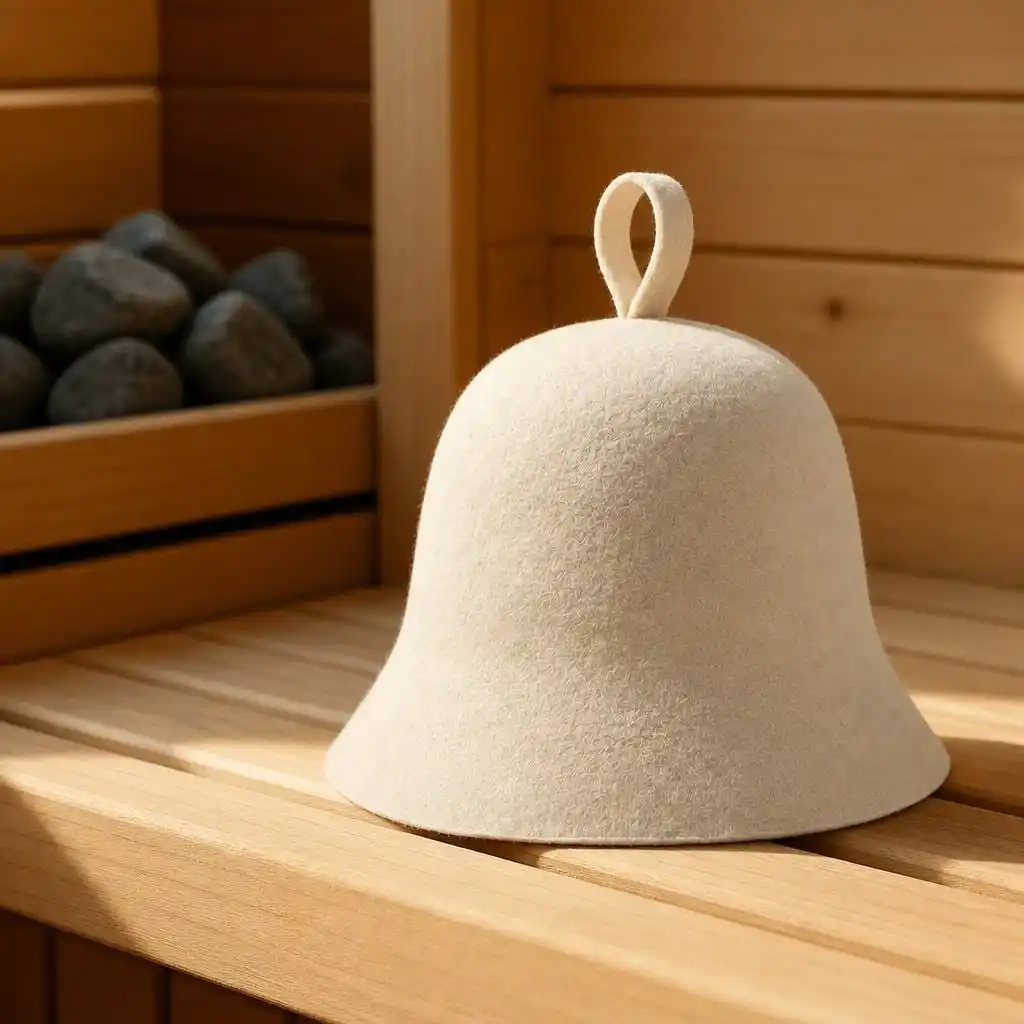
The same fineness that makes merino soft also makes it full faster — the fibres entangle with less work. That is convenient when you want a seamless shell out of a single cone, and inconvenient when someone drops the hat in a hot wash. Both consequences come from one property, which is why the care section later in this article is short and strict.
What merino does not add: extra heat resistance, a certification, or a guarantee. “Merino” is a fibre description, not a standard, so if a supplier quotes it, ask for the micron range and for consistency between lots. A coarser wool hat insulates about as well; it simply feels rougher against the forehead, and that is a price decision rather than a performance one.
One-piece fulled vs sewn panels
There are two ways to make a wool hat, and the difference shows up on the top of your head.
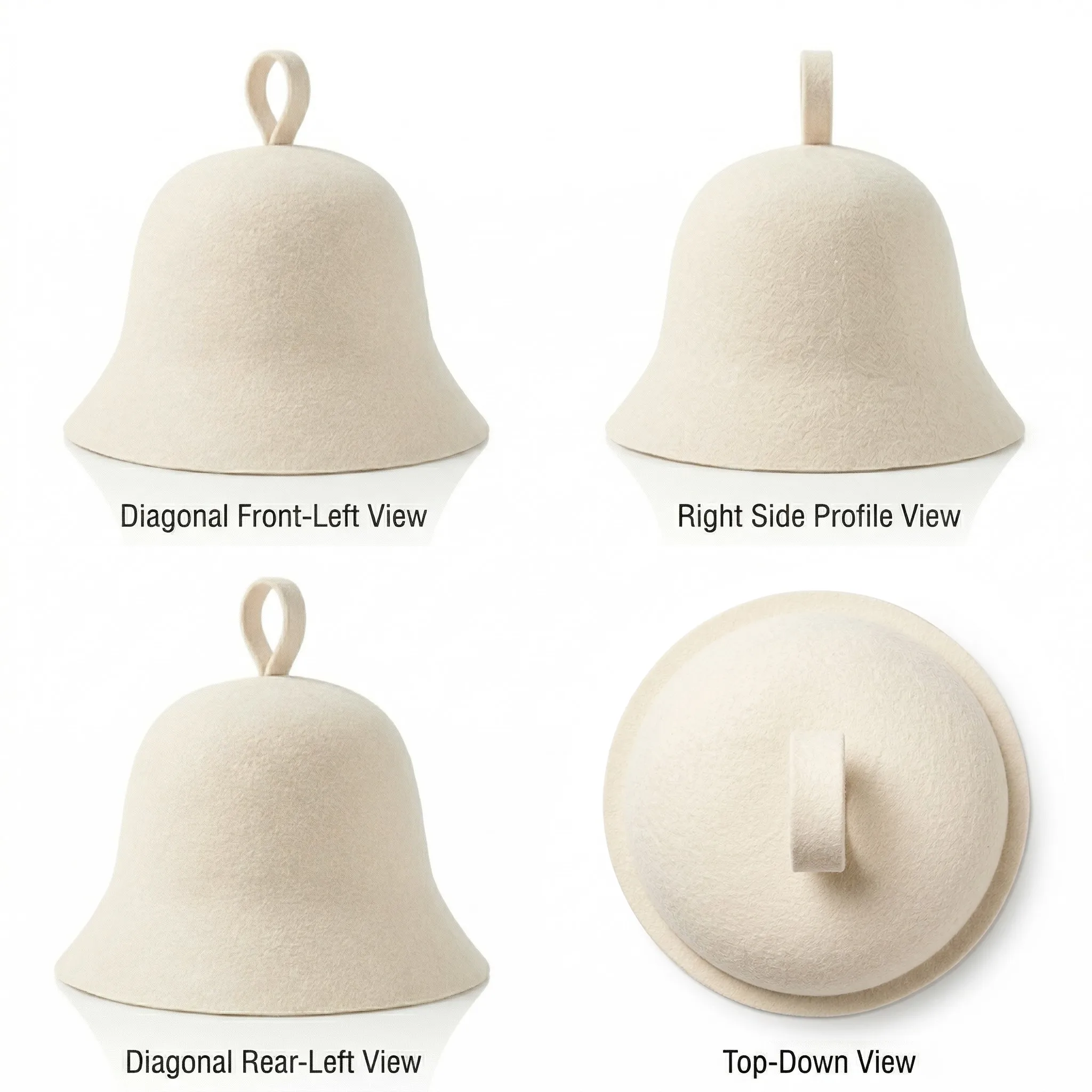
A fulled one-piece shell starts as a single cone of fibre and is worked with heat, moisture and friction until the fibres interlock and the shape sets. Nothing is joined afterwards: there is no seam anywhere, the thickness is even by construction, and the edge you see at the brim is the material’s own edge. A cut-and-sew hat takes flat felt, cuts panels and joins them, which is cheaper to tool and easy to vary — and it puts a seam across the crown, the one place where a hat presses.
| Attribute | Fulled one-piece | Cut-and-sew |
|---|---|---|
| Crown seam | None | A ridge across the top of the head |
| Pressure points | None from construction | Seam allowance sits on the scalp |
| Repeated steam cycles | Holds shape, tightens slightly | Thread ages, panel edges can lift |
| Thickness | Even by construction | Follows the felt batch |
| Cost driver | Labour and fulling time | Cutting and sewing time |
| Best fit for | Daily use, spa and hotel programmes | One-off promotional runs |
For a hotel or a spa that launders and reissues hats, the seam is where a hat first looks tired: it is the part that holds water longest and the part a guest notices. For a short promotional run, a sewn hat is a reasonable compromise — it is the same fibre doing a similar job, with a known weak point.
Where the hat stops working
A wool hat is a good tool with a short list of things it cannot do, and buyers who know the list make fewer returns.
- A soaked hat insulates poorly. Dry wool traps air; water in the fibre conducts heat far better than air does. In a wet steam room the hat will load up, and at that point it is mostly a wet layer on your head. Wring it out, or carry a second dry hat for the second round.
- It does not extend a safe stay. Heat strain is a function of time, humidity, hydration and the room, not of headwear. A hat that makes the first minutes comfortable is not permission to sit longer.
- It does not dry hair. Wet hair under a wool hat stays wet and stays warm, which is uncomfortable rather than dangerous. Put the hat on dry or towel-dried hair.
- It does not fix fit. A hat that slides over your eyes or presses the ears flat is worse than no hat, and felt does not stretch into shape the way a knit does.
- It is not a laundry item. Every hot wash takes another round of fulling out of the shell. The hat is cheap to own and expensive to abuse.
Fit, the loop, and how to size it
Fit is the one variable a buyer controls after the fibre is chosen, and felt forgives almost nothing.
Measure the head circumference above the ears, and quote a range rather than a single number. A fulled shell holds the size it was made in: if the sample is tight on the first wearer, it will still be tight on the tenth. The brim should sit just above the eyebrows and cover the tops of the ears without folding them down; a hat that covers the eyes is being worn too low, usually because it is too large.
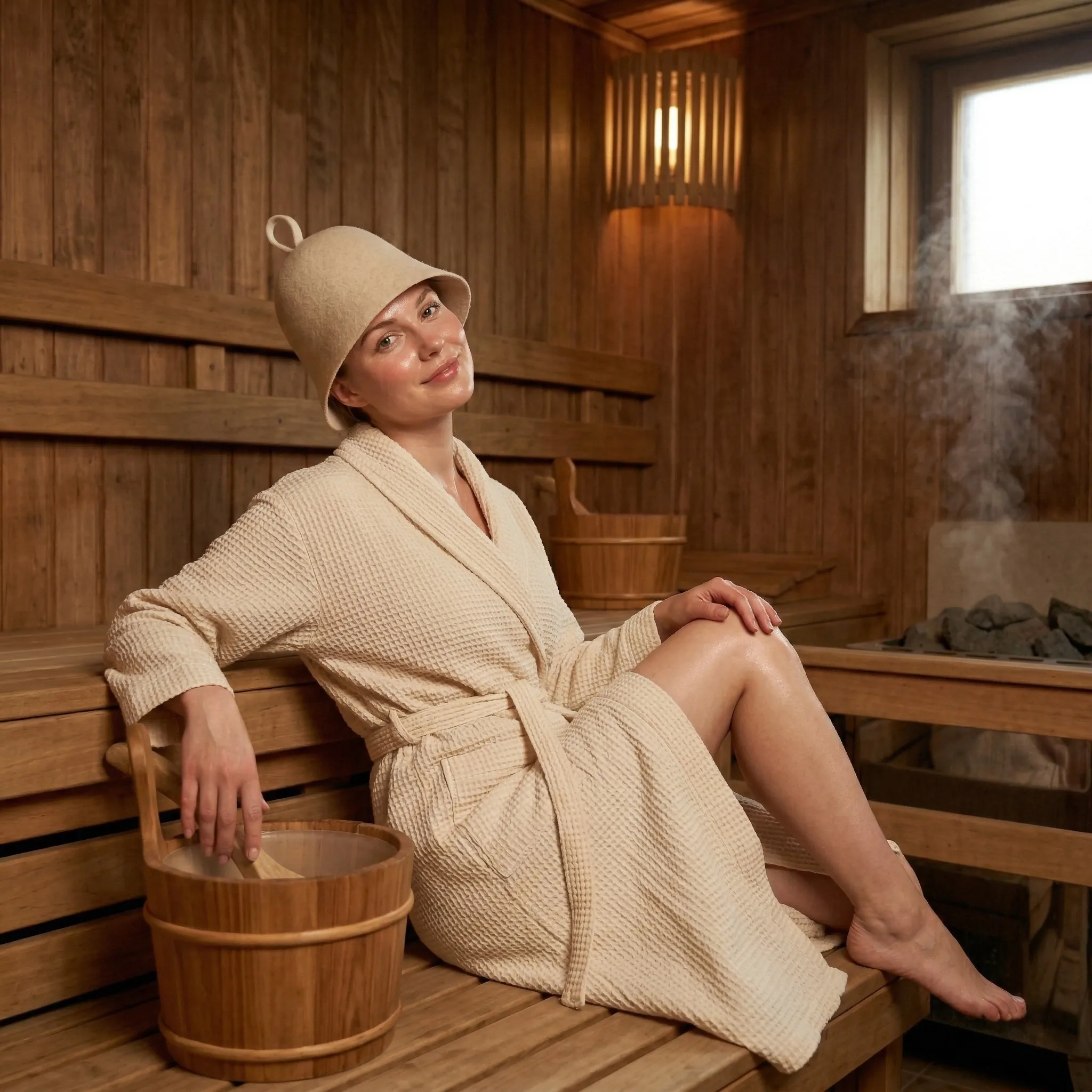
The loop on the crown has two jobs, and neither is decoration. It lets the hat hang to dry without resting on a damp surface, and it gives you something to pull when taking the hat off, so the brim is not stretched out of shape by a wet hand. A damp hat left in a bag overnight will smell of wet wool by morning; a hat hung by the loop will not.
Care: two things that ruin a wool hat
Heat and agitation. Those are the two inputs that made the felt in the first place, and a fulled hat does not distinguish between the factory and your washing machine.
| Do | Do not |
|---|---|
| Hand wash cool with a wool detergent | Machine wash hot, or tumble dry |
| Press water out between towels, then reshape by hand | Wring, or lift a soaking hat by the loop |
| Dry flat, away from radiators and direct sun | Hang a wet hat: the crown stretches and the brim droops |
| Air it after every session, dry before storing | Store it damp in a bag or a locker |
| Brush lint off with a soft clothes brush | Iron it flat, or press a hot iron on the felt |
If a hat does shrink, it shrinks permanently — there is no reversing a second felting. That is why the care card matters more for this product than for a cotton hat: the failure is not gradual wear, it is one hot wash.
Questions buyers ask before the first order
Does a sauna hat actually protect your hair?
It keeps the scalp and hair out of the direct plume of hot air that rises off the stones, which is the part that feels like a hair dryer pointed at your forehead. It is not a heat shield: hair that is already wet under a hot room is the combination worth avoiding, and the hat does not change the room.
Will wearing one make me feel hotter?
No, but it does not cool you either. The hat slows the rate at which heat reaches the scalp, so the first minutes feel milder; the air inside warms up as well, which is why you should take it off when it feels warm rather than sit longer because of it.
Can I use it in a steam room or a Russian banya?
Yes, and it will take on more moisture there than in a dry Finnish sauna. Wet wool conducts heat far better than dry wool, so a soaked hat insulates poorly: wring it out, or keep a second dry hat for the second round.
Will it shrink?
A fulled hat has already been shrunk into shape, so the risk is a second round of felting. Hot water plus agitation does that permanently. Cool hand wash, no wringing, dry flat away from direct heat.
Is one size enough, or do we need a size range?
Only if the stated head circumference covers your buyers. Felt has little stretch, and a fulled shell holds the size it was made in, so a tight hat stays tight. Quote the range in centimetres and inches.
Can we put our logo on a wool sauna hat?
Yes, and the method decides how it ages. Embroidery and a stitched felt patch hold up; a woven label is the most durable; laser engraving chars wool and leaves a smell; screen print on a textured felt surface loses fine detail and abrades at the brim.
Next step
Send the brief, not just the photo
A sauna hat is five decisions: fibre, shell construction, size range, finish, packaging. Send the use case and we will come back with a construction that survives commercial laundering — or tell you where wool is the wrong answer for the room you have in mind.
Worth including
- Use case home retail, spa rental, hotel amenity, gifting
- Fibre merino or other wool, and the micron range you will accept
- Construction fulled one-piece, or cut-and-sew if the budget needs it
- Size range head circumference, in cm and inches
- Finish brim depth, loop, colour, branding method
- Volume first run quantity and target landed cost
Post time: Oct-30-2026