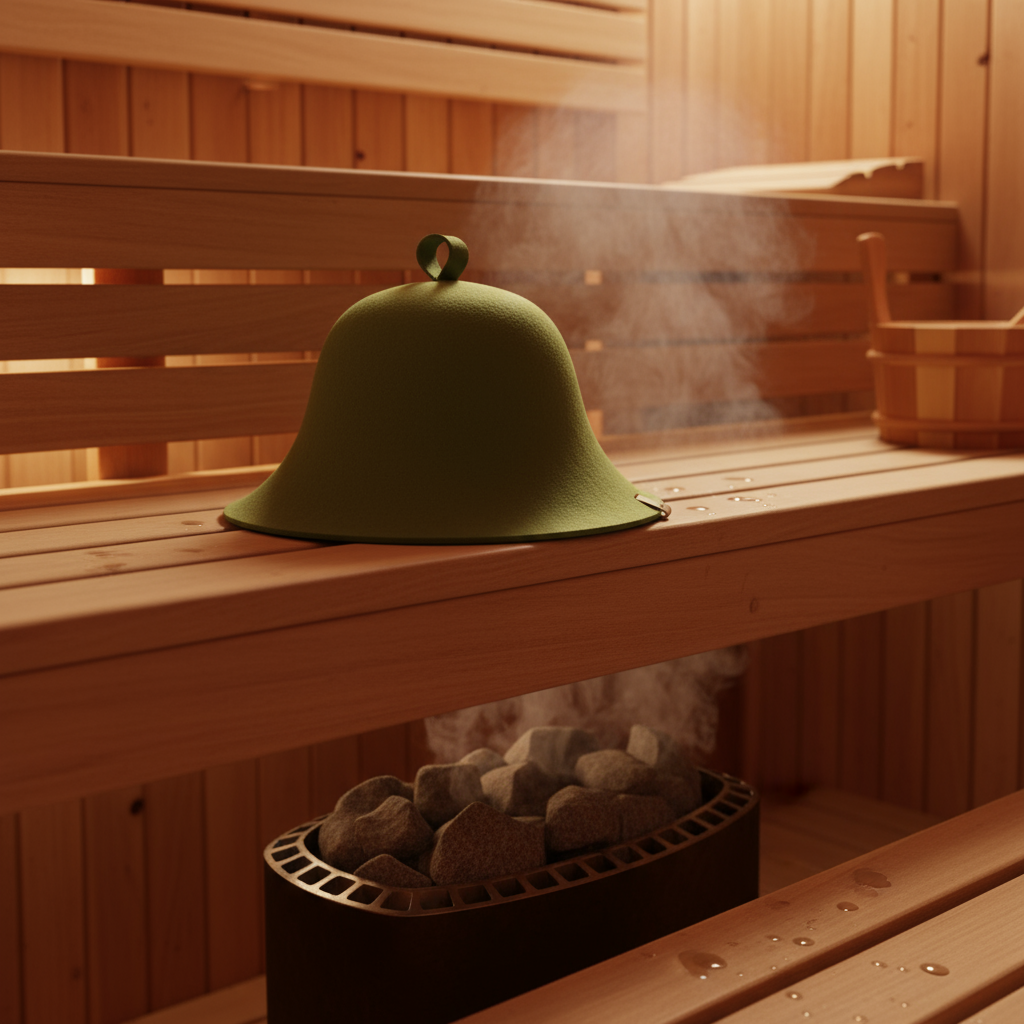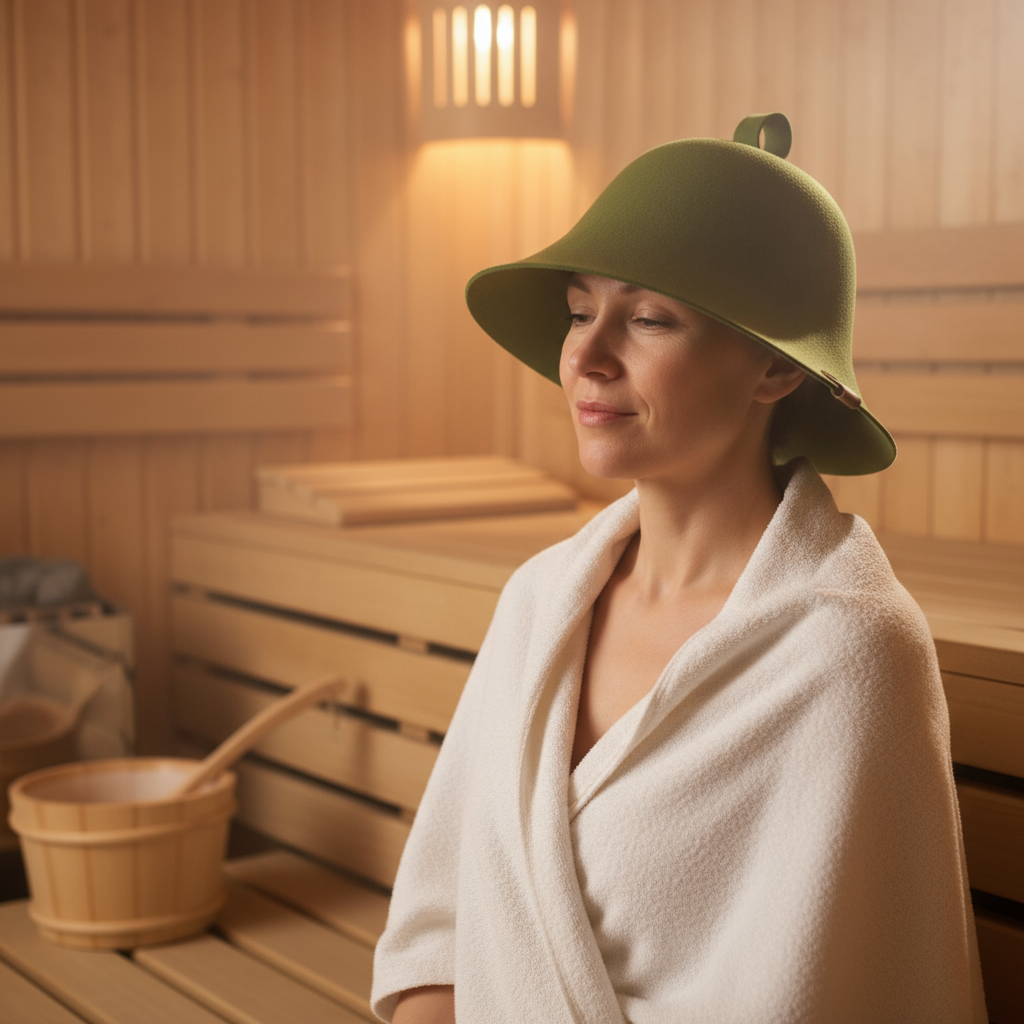
Sauna temperatures commonly range from 70 °C to 100 °C. While users typically prioritize systemic thermotolerance, the cranial region—characterized by high vascular density and abundant eccrine gland activity—is particularly vulnerable to thermal stress. Unprotected exposure may precipitate symptoms including dizziness, tachycardia, and, in severe cases, heat exhaustion or heat stroke. A practical, evidence-informed solution for maintaining craniothermal homeostasis is provided by purpose-designed wool sauna headwear.
This headwear is fabricated exclusively from 100% natural wool fibers. Its thermal insulation efficacy arises from wool’s inherent crimped fiber architecture and the insulating air pockets trapped within the three-dimensional fiber matrix. With a nominal thickness of 2–4 mm, the headwear attenuates direct conductive and convective heat transfer to the scalp. Controlled experimental trials conducted under standardized 80 °C sauna conditions demonstrated that scalp surface temperature was reduced by 8–12 °C relative to the unprotected condition, while intra-hat microclimate temperature remained within a physiologically comfortable range (≤35 °C), thereby mitigating localized hyperthermia.


Moreover, wool exhibits intrinsic hygroscopic and moisture-wicking properties. During sauna-induced diaphoresis, wool fibers absorb up to 30% of their dry weight in water and facilitate rapid capillary-driven moisture transport to the fabric surface for efficient evaporative dissipation. This bidirectional thermoregulatory function enables dynamic adaptation: heat absorption and sweat evaporation are enhanced during peak thermal load, whereas residual thermal energy is retained during post-sauna cooling phases. Collectively, this mechanism supports sustained craniothermal equilibrium without compromising breathability or subjective comfort.
Weighing only 70–110 g, the headwear imposes negligible mechanical load and features an ergonomically calibrated fit, ensuring prolonged wearability. It demonstrates consistent efficacy across diverse sauna modalities—including traditional dry saunas, steam baths, and infrared saunas—thereby enhancing both safety and comfort during therapeutic heat exposure. As corroborated by longitudinal user feedback: “I experience no cephalic discomfort—neither dizziness nor stuffiness—and am able to extend my sauna session by approximately ten minutes without adverse effects.”
Post time: May-28-2026